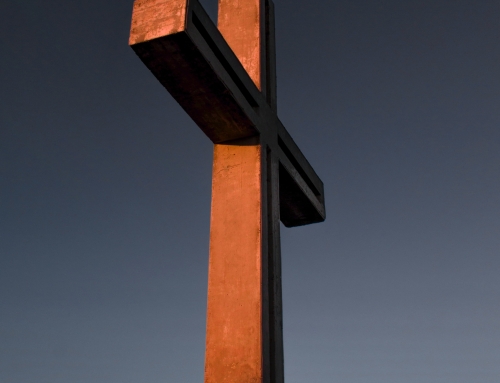
Have you ever thought about what exactly Jesus’ death on the
cross means, and what it has meant over time?
Here is a brief reflection on what is known as “atonement theories”, for
Christ’s death atoned for our sins.
My grasp of atonement theories has
always been somewhat muddled—a hodgepodge of Southern Baptist Penal Substitutionary Atonement Theory
(meaning essentially that Jesus was punished in the place of sinners), a vague
notion of Christ’s victory over death/evil/demonic forces, as well as all the
injustice of the world, and then my own personal beliefs, which hold similar to
Abelard’s counter subjective view that Christ’s death reveals something
vital about the nature of God towards humanity—a love that defies death—and I
find that I exist now somewhere in the midst of all of these ideas.
Today I take Douglas John Hall’s words to heart in that atonement theories
teach us a lot about ourselves, our culture, and how the gospel narrative takes
new form over time and great political/economic/societal transitions. The
danger is how pervasive it is that “theological dogmas [persist] beyond their
point of timeliness.” I am still somewhat taken aback by our (I’ll use
the collective “our” as I find myself at times falling into this category)
extreme bloodlust, and our need for a sacrifice and a scapegoat. The idea
that Jesus is our scapegoat, and
somehow satisfies God’s need for death as a punishment for our wayward ways, is
a notion that many cling to, even if it no longer matches our current values of
an all-loving and merciful God.
I also find myself taking comfort in Luther’s stance of “freedom from the Law”,
and the hope of resurrection that ultimately means a relationship with God and
humanity that is made new. Yet with all of these dynamic and
complicated theories, I tend to articulate one the most—especially when talking
with youth and young adults. It seems that when I need a simple and
loving way to describe what Jesus’ death on the cross meant then, and means to
us living today, I say that it demonstrated to us how much God loves us, that
God would become like us, and then die like us, in order to bring about the incredible
gift of resurrection.
Maybe this is too simple an answer, and maybe it still leaves a lot of
questions left unanswered, but Abelard’s theory was what brought me comfort
when I was confused about God and what it meant to be a Christian. I
suppose it still is my comfort zone when describing this gruesome act that
became the pinnacle focus for Christianity in all times and places.
Regardless
of where we land on this idea of atonement and what it means for believers
today, I think we can all agree that Jesus’ death meant something then as it means something now.
And we can see that God was not immune to what happened then—it was a sacrifice, and God is not immune to the
suffering we face in our lives today. God
knows pain, God knows death, and God suffers when we suffer. God may not erase the challenges we face, but
God is with us every step of the way—bearing the burden alongside us.